Tarot Cards for Career Prediction: Your Complete Guide to Job Readings & Professional Insights
Luna Reed
July 14, 2025
Tarot Cards for Career Prediction: Your Complete Guide to Job Readings & Professional Insights
Career questions are probably the second most common reason people turn to tarot, after relationships. And the reason makes sense: professional situations often involve a lot of uncertainty, high stakes, and a nagging feeling that you already know what you should do but can't quite access it clearly.
I've used tarot as a career reflection tool since I started my own practice, and I want to be clear about what it actually does. It doesn't predict whether you'll get the job offer or whether the startup will succeed. What it does is surface the assumptions, fears, and priorities you're bringing to a professional situation — which is often more useful than a prediction would be.
What Career Tarot Readings Are Actually For
The most useful career readings I've done — whether for myself or when thinking through situations with others — happen when the question gets specific. "What energy surrounds my work right now?" is useful. "Should I quit?" is often too binary. "What's keeping me in a situation that doesn't fit?" tends to get closer to the real thing.
Tarot is particularly well-suited to three professional situations: when you're considering a significant change (new job, new direction, going freelance); when you feel stuck and can't identify why; and when you're facing a decision between two paths that both seem reasonable. In each case, the cards don't decide for you — they help you see what you're actually weighing.
Cards That Speak to Professional Life
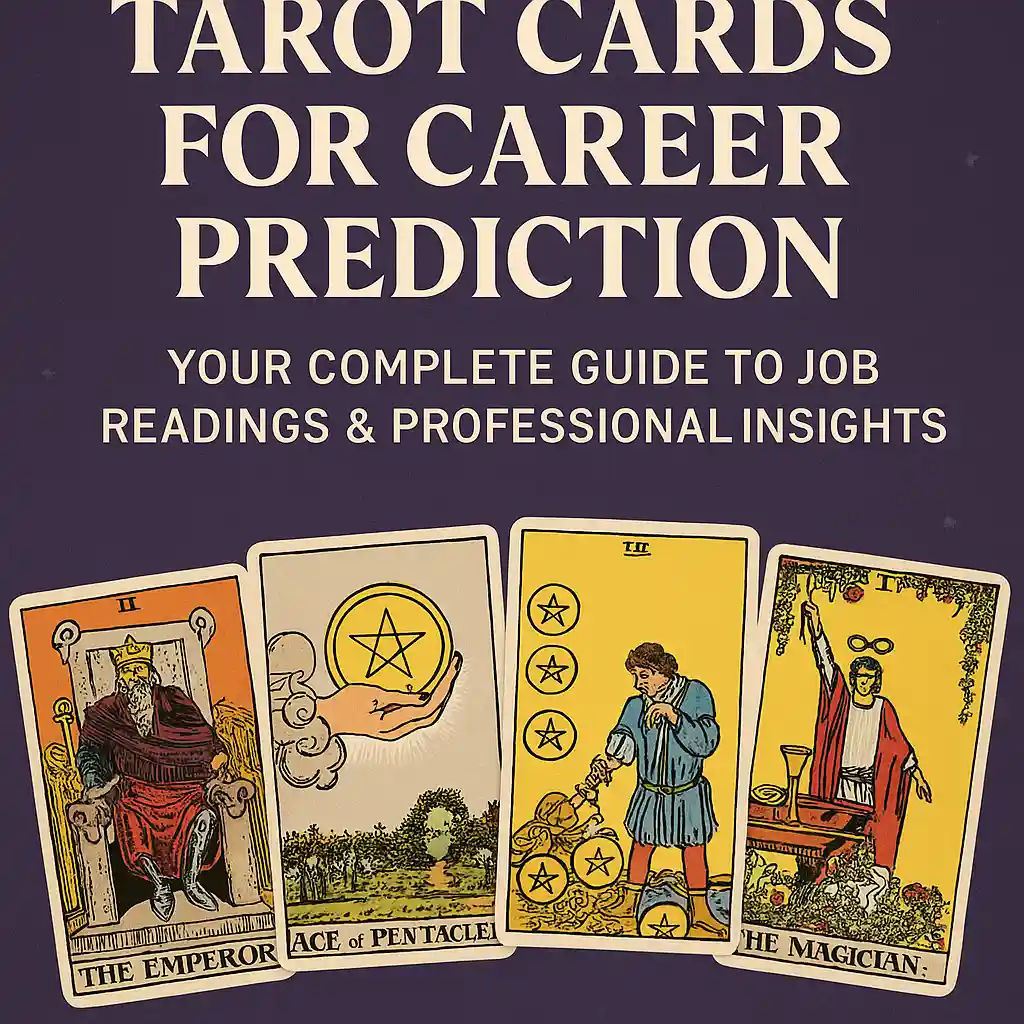
The suit of Pentacles maps most directly onto career and material concerns. The Ace of Pentacles signals a new opportunity — often more of a starting point than a guaranteed success. The Three of Pentacles is about collaborative work and recognition. The Eight of Pentacles represents skill-building and deliberate practice; I've found this card shows up most often during periods of focused development. The Ten of Pentacles points to long-term stability and legacy.
From the Major Arcana, a few cards carry particular weight in professional readings. The Magician is about having the tools and skills you need — it often appears when someone is underestimating their own readiness. The Chariot represents forward momentum and determination, but also the need to control direction rather than just speed. The Wheel of Fortune comes up during transition periods, signaling that external circumstances are shifting whether or not you've chosen them to. The Devil in a career reading almost always points to some form of entrapment — workaholic patterns, a toxic environment, staying out of fear rather than genuine preference.
Two combinations I see repeatedly: The Tower followed by The Star usually means a disruption that's actually clearing the way for something better. The reversed King of Pentacles often reflects self-doubt about professional authority or financial judgment.
Three Spreads That Work
The career snapshot (three cards). Where you are, what's blocking you, what would help. This is the spread I'd recommend for anyone feeling professionally stuck. The middle card — the block — is usually the most informative, and often the most uncomfortable.
The decision spread (five cards). Option A, Option B, what you're not seeing about each option, and an underlying factor that influences both. This is useful when you have two concrete paths and can't move forward. What I've noticed is that the "hidden factor" card often reframes the entire question.
The single-card weekly anchor. Pull one card on Monday and ask: "What's worth paying attention to this week professionally?" Keep it visible. Check at the end of the week whether the card's theme showed up. This builds interpretive intuition faster than any studying.
Questions Worth Asking
The quality of the reading often depends on the quality of the question. Some that tend to work well in career contexts:
"What am I avoiding looking at in my current work situation?" — This surfaces blind spots more effectively than forward-facing questions.
"What is this career period teaching me?" — Useful when you're in a difficult stretch and struggling to find meaning in it.
"What do I actually want, versus what I think I should want?" — The cards often make a distinction here that's hard to articulate directly.
"What's my next most useful step?" — This is deliberately narrow. It doesn't ask for a long-term prediction, just the next concrete move.
Where Tarot and Practical Judgment Intersect
I want to address something directly: tarot should complement practical reasoning, not replace it. If you're considering leaving a job, you also need to think about finances, market conditions, what skills you want to develop, what you can realistically achieve in the near term. Tarot doesn't know your resume or your industry.
What it can do is help you access your own honest assessment of a situation — the read you already have, underneath the noise of social expectations and anxiety. Most people who do a career reading come away not with a new answer, but with clearer access to an answer they already had.
For freelancers and people building their own businesses, tarot tends to be particularly useful around timing and alignment questions — not "will this product succeed," but "am I approaching this in a way that fits how I actually work?" Those are softer questions, but they matter.
A Note on Frequency
Pulling career cards every day, or asking the same question repeatedly because you didn't like the first answer, reduces the signal quality quickly. Monthly readings that look at the broader arc of a professional period tend to be more useful than frequent short pulls. Save the shorter pulls for moments of genuine uncertainty, not ongoing anxiety management.
If a reading gives you an answer you didn't want, sit with it for at least a week before pulling again. The discomfort is often where the useful information is.
🌙
About the Author
Luna Reed
Luna has been using tarot as a personal reflection tool since 2016. With a background in psychology, she approaches the cards not as a system of prophecy but as a structured framework for self-inquiry. She is skeptical of fortune-telling claims and more interested in what tarot reveals about the assumptions and patterns we bring to our own decisions.