Tarot Readings for Love and Relationships: Your Complete Guide to Emotional Guidance
Luna Reed
July 13, 2025
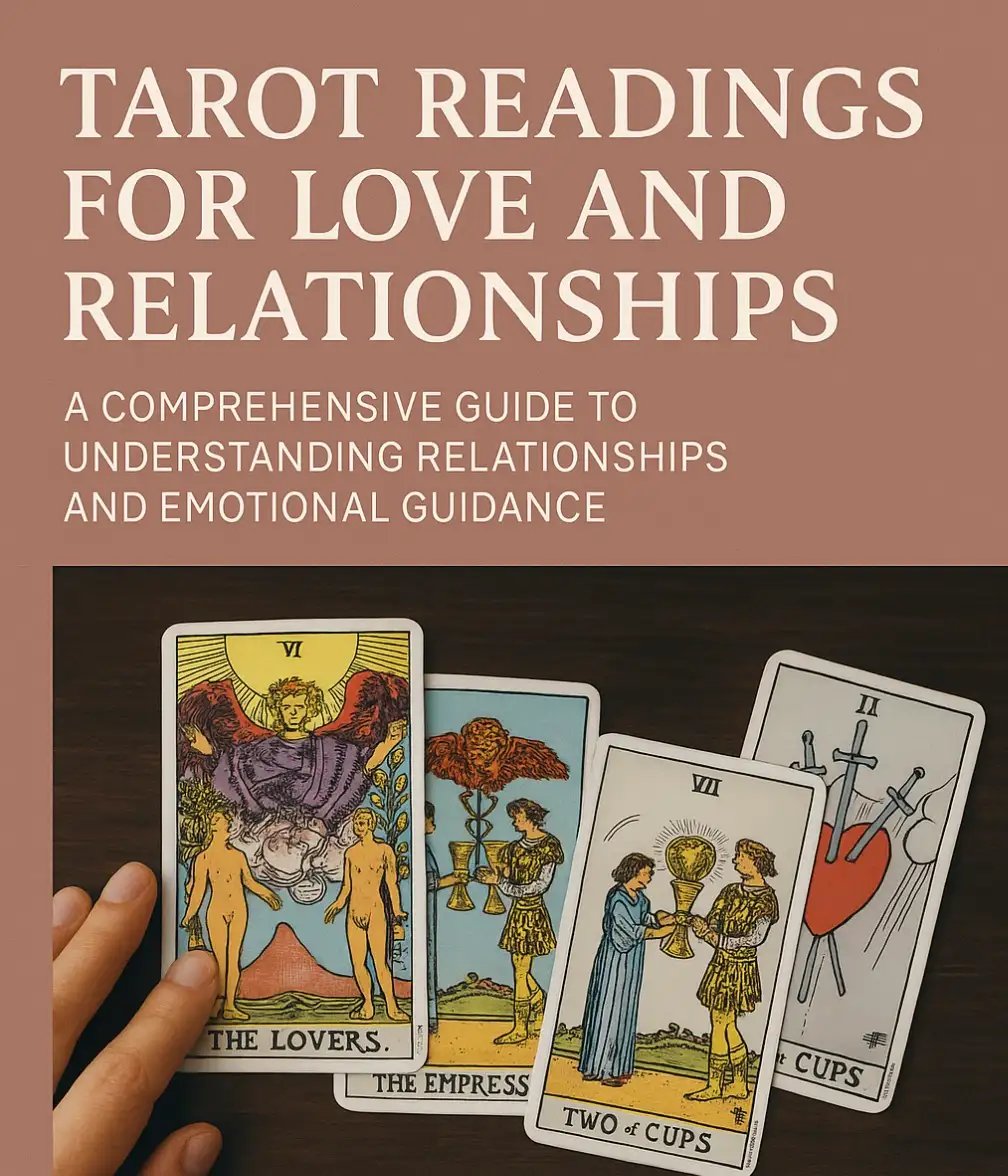
Tarot Readings for Love and Relationships: Your Complete Guide to Emotional Guidance
Relationship questions are the most common reason people sit down with a tarot deck. That's not surprising — romantic situations are often the ones where we're least able to think clearly, where we want reassurance but also actual clarity. Tarot, used well, can offer the latter.
I want to be direct about what love readings can and can't do. They won't tell you whether someone definitely loves you back or whether a relationship is guaranteed to work out. What they can do is surface the emotional patterns, communication blocks, and inner conflicts that are actually driving a situation — which is usually more useful than a prediction anyway.
How Relationship Readings Actually Work
When you do a tarot reading focused on a relationship, you're not accessing information about the other person's private thoughts. You're working with your own emotional landscape: what you're bringing to the situation, what's blocking you, what you might be avoiding. The cards create enough symbolic distance from the situation that you can think about it more honestly than you might otherwise.
In my experience, the most useful relationship readings happen when the question is specific and genuine, not when someone is looking for the cards to validate what they've already decided. "What am I not seeing in this situation?" is a far better question than "Will they come back to me?"
Spreads Worth Using
Rather than listing every possible spread, here are the three that actually get used consistently:
Three-card relationship snapshot. Position one covers what you're bringing to the dynamic, position two covers what the other person or the relationship itself is carrying, position three shows where things are heading based on current energy. This spread is flexible — it works for new connections, ongoing partnerships, and situations where something feels off.
The communication spread. Four cards: what you're saying, what you mean, what they're hearing, and what's not being said. This is particularly useful when a relationship feels stuck in a pattern of misunderstanding. Often one of those positions will produce a card that immediately clarifies the disconnect.
The self-reflection draw. A single card, drawn when you're feeling reactive about a relationship situation. The question isn't about the other person — it's "What do I actually need right now?" I use this one more than any multi-card spread.
Cards That Tend to Show Up in Love Readings
A few Major Arcana cards come up repeatedly in relationship contexts and are worth knowing well.
The Lovers is obvious, but it's often more about a choice than about romantic connection — particularly when it shows up in a position about the self rather than the relationship dynamic. The Tower in a love reading almost always points to a reckoning with something that's been ignored. It's uncomfortable, but it usually marks a turning point. The Moon signals confusion, hidden information, or idealization — seeing something as you want it to be rather than as it is.
From the Minor Arcana, the Two of Cups represents genuine mutual connection. The Three of Swords is heartache — not necessarily a breakup, but a truth that's painful to acknowledge. The Knight of Cups often appears when a situation is more about fantasy or potential than reality. And the Ten of Cups represents the kind of sustained, stable happiness that takes more than feeling — it takes commitment and work.
Reading Ethics Worth Taking Seriously
One thing I feel strongly about: avoid reading about another specific person without their knowledge, especially in ways that are really about trying to understand or influence their private internal state. Reading "What is X thinking about me?" edges into territory that doesn't respect their autonomy as a person. Reframe those questions toward yourself — "What do I need to understand about this situation?" — and the reading will actually be more useful.
The other common mistake is repetition. Asking the same question every few days because you didn't like the answer is a way of using tarot to avoid thinking, rather than to think better. If a reading didn't land, sit with it for a few days before pulling more cards.
Using Tarot After a Breakup
This is where I've found tarot most valuable — not in active romantic situations, but in the processing that happens afterward. A breakup or significant relationship ending leaves a lot of emotional material to sort through, and tarot can help structure that. Questions like "What was I learning in this relationship?" or "What pattern am I ready to let go of?" create more useful reflection than any question about what the other person is doing now.
The cards most people fear in this context — the Tower, the Three of Swords, the Ten of Swords — are also the most honest. They acknowledge that something hard happened, which is more useful than cards that offer premature reassurance.
A Practical Starting Point
If you're new to relationship readings, start with three cards and a single honest question. Resist the urge to immediately look up meanings. Sit with the images for a minute first. Notice what your first reaction is — that initial response often tells you something the more deliberate interpretation misses.
Keep a journal of your readings. Not because patterns will necessarily reveal some cosmic truth, but because looking back at what you were asking three months ago, and what cards showed up, tends to clarify things in retrospect that weren't clear at the time.
Tarot's value in relationship contexts isn't that it gives you answers. It's that it gives you a structured way to ask better questions.
🌙
About the Author
Luna Reed
Luna has been using tarot as a personal reflection tool since 2016. With a background in psychology, she approaches the cards not as a system of prophecy but as a structured framework for self-inquiry. She is skeptical of fortune-telling claims and more interested in what tarot reveals about the assumptions and patterns we bring to our own decisions.